|
Encaustic, Painting, Workshops |
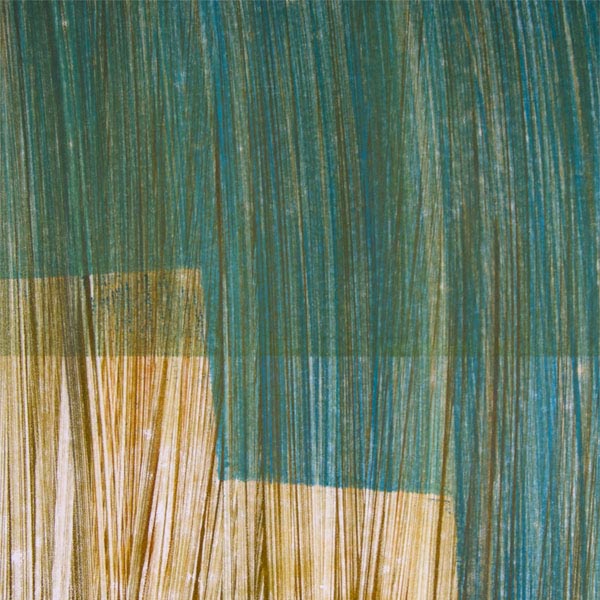
| Beginning artists are invited to learn the basics of encaustic painting with me at my studio in March.
Encaustic for Beginners
Date: Saturday, March 20th, 2010
Time: 1:00 to 4:00pm
Place: TBD
Cost: $125, includes materials
Details: Here
|
|
Beekeeping |
| 
Two jars of honeybee propolis dissolving in rum, 3/1/2010
Honeybee propolis ranges in color from dark brown (almost black) to rusty red, gold and green depending on what plants the bees who made it foraged on. Raw propolis is changeable, taffy-like stuff (stretchy and sticky when warm, brittle when cold) made from trees by bees. You can read more about it and see another picture here.
The colors that rise up during tincture making are breathtaking. I’ll shake these jars a couple of times a day for the next two weeks and will get a hit of warmth every time I see that red. I wonder if it will change with time or stay the same?
Recipe here.
|
|
February 9, 2010 11:46 am |
|
|
Painting, Poems |
| Why do you paint?
For exactly the same reason I breathe.
That’s not an answer.
There isn’t any answer.
How long hasn’t there been any answer?
As long as I can remember.
And how long have you written?
As long as I can remember.
I mean poetry.
So do I.
- e. e. cummings
Does anyone know the history of this poem? I’d like to know who the painter is.
|
|
January 26, 2010 12:57 pm |
|
|
Encaustic, Painting |
| Those of you arriving here via the Montserrat Encaustic Conference blog, welcome! It’s a joy to connect with you. I write about beeswax, honeybees and painting from an appreciative and (hopefully) curious point of view. Your comments are always welcome.
The last few weeks have found me blogging about a Wayne Theibaud interview transcript (here and here). Thiebaud’s supportive yet rigorous attitude toward painting as an endeavor worthy of spending one’s life on inspires me. He’s for painting with awareness of the world around you; an understanding of how your work fits in; and the ability to assess your own work and receive feedback and inspiration from your friends.
According to Thiebaud being a painter, a relevant painter, means participating in the conversation about what painting is. It’s a yearning for painterly conversation that draws me to the conference and spurred to me to make Wax Fetish, the talk/slide show I’m giving at on Sunday, 6/13. My hope is to elaborate on what many of us intuitively know about beeswax but have a hard time saying. That it’s important. That it has something to do with the body. And how neatly it fits into the story art tells about human beings.
Please, join in the fun.
(023) Wax Fetish: Beeswax, Materialism and Encaustic Paint
Talk: Yes, beeswax is beautiful! But have you ever wondered, beyond beauty, what your art is about? Wax has physical and symbolic properties that engender a cult-like appreciation. Find out more about why beeswax is special and how art made with it refers to the viewer’s body in this image-rich talk about encaustic painting that draws on art history, experimental film, philosophy and honeybee biology.
Level: All
Presenter Laura Tyler uses encaustic to make elemental, abstract images of plants and animals. She is the producer and director of the documentary film, Sister Bee and speaks nationally about beekeeping and honeybees. She earned a BFA in filmmaking from the Massachusetts College of Art and is a co-founder of the Boulder, Colorado, based honey company, Backyard Bees. She is a lover of sunlight, flowers and alizarin orange.
|
|
January 14, 2010 12:10 pm |
|
|
Encaustic, Painting |
| 
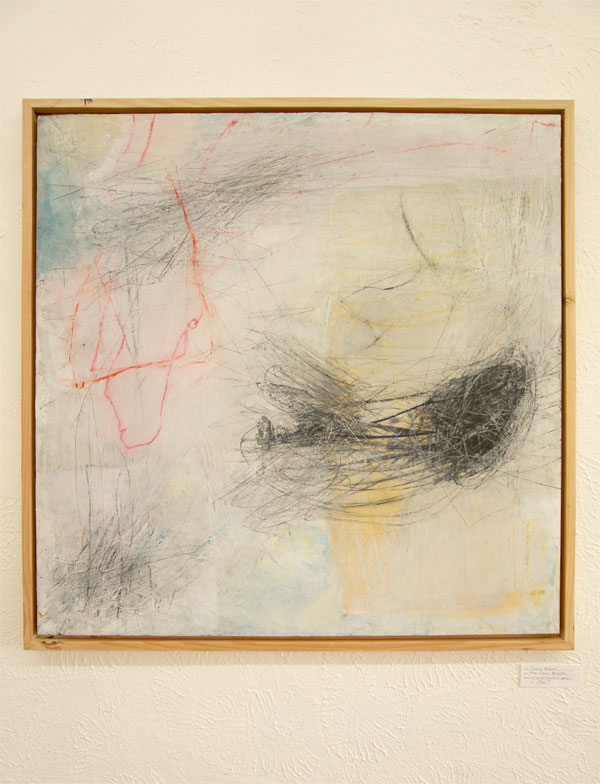
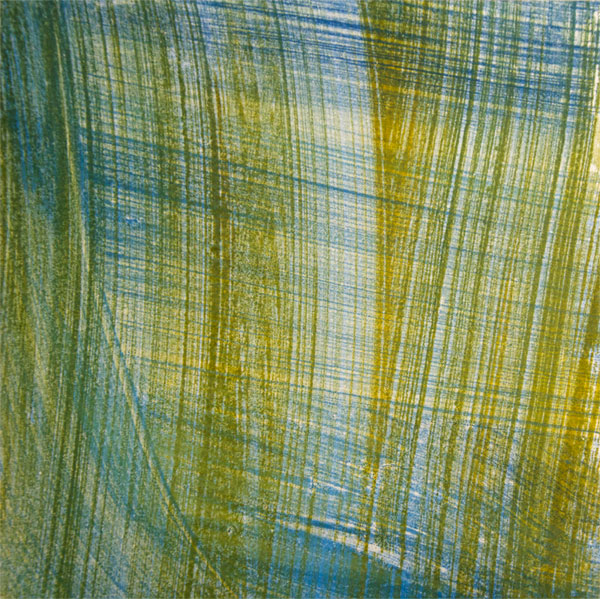
The Road , encaustic and ink on panel, 20″ x 16″
A new painting. The subject was a dill plant and while making it I had a reverie about plants growing up in a landscape of wildly abandoned concrete. The white band along the bottom is what makes this a painting and not a drawing, to me.
|
|
Creative Process, Painting |
| Here’s another gem from the Thiebaud transcript. When asked why such a high percentage of art students never go on be artists, he says:
Well, it’s too damn difficult and too painful on the one hand. I think it’s a kind of neurosis. You have to give up a lot to gain a little. There are no guaranteed results. Those are not good options for a life. But if you are willing to make a life out of it, if you can learn to hope for the best and be prepared for the worst, and see the painting itself as an extraordinary human invention, that becomes enough for you. Going to museums, taking it on, loving what you’re doing, conditioned to the failures, getting some good instruction and critical reaction, which has nothing to do with success but… with a realization of where you are, what kind of progress you’re making… and to form … a kind of community of your own with some of the people, whether it’s one other person or a group of people. Those groups represent a kind of balancing act where you can have some kind of frank, honest confrontation and some sort of shared, communal love and a series of responses; then you’re going to be okay…
And another…
Try and avoid becoming what I might refer to and an “art wold employee” where you develop these products of commercial value, where you manufacture some kind of product. That’s not what painting is about. Painting is about, for me, research, confrontation, taking risks, going on and trying to challenge yourself to get better always… It has to do really with some kind of self confrontation, continuously…
Challenges wrapped in encouragement. May they inspire.
|
|
Quotes |
| 
Between every two pines is a doorway to a new world.
- John Muir
|
|
December 18, 2009 3:18 pm |
|
|
Painting |
| 
I’m reading the Wayne Thiebaud video transcript (from the “70 Years of Painting” show), searching for juicy bits to share with you. They are not hard to find. Here’s what he has to say about advice he received from Robert Mallary that helped him “shape-up” as a painter.
“Work harder; develop a critical sense; understand what you are doing and know how to design problems which would get you to someplace where you thought you wanted to be… He would spend hours on what it was to interrogate a work of art: How to understand in in terms of its formal relationship… Make it darker, how to transfer it from, say, one kind of value structure to a higher structure, what would that do to it? What to do if you were to take all your color out of it and do it in black and white. Those options, which represent for a painter, I think, the tools of use and how to prepare for yourself always to be specific in order to take risks, to not be afraid of failure, make lots of work which is worth only throwing out. That was a very big and helpful exercise…
The “nerve of failure” is a very important aspect of painting and while it makes you uncomfortable and vulnerable, if you don’t elevate your desires and ambitions to some kind of level of reality in terms of the long tradition that you are a part of, however small, then you have the risk of ignobling that great tradition which we use and which we respect and which we are hopefully a part of.
- Wayne Thiebaud interviewed by Rose Fredrick, 3/16/09
|
|
Inspiration, Painting |
| Here’s a nice article about roundness inspired by this Kandinsky painting.

Several Circles by Vasily Kandinsky, 1926
‘The circle, he (Kandinsky) wrote, is “the most modest form, but asserts itself unconditionally.” It is “simultaneously stable and unstable,” “loud and soft,” “a single tension that carries countless tensions within it.”
Kandinsky loved the circle so much that it finally supplanted in his visual imagination the primacy long claimed by an emblem of his Russian boyhood, the horse.’
- Natalie Angier for the NYTimes
|
|
Inspiration, Movie Reviews |
| A year ago I took a wonderful class, Jungian Concepts Illustrated by Animals in Fairy Tales. As part of the introduction each person was invited to say which animal “brought” him or her to class. I picked the fox. Foxes are common here in Boulder, Colorado but I still get a hit of excitement every time I see one (like the time this summer when I woke up before dawn and found one the garden nosing around the bees).

Neighborhood fox sunning itself in backyard, November 2009
Speaking of foxes, there are two films you need see if you’re as into foxy beauty as I am. They’re both about the yearning/harrowing relationships we humans have with wild things.

Fantastic Mr. Fox, out in theaters now, is a masterpiece. Seriously. More than any other recent film, it made me itch for the resources only Hollywood can bestow. Gorgeous, funny, tender and sweet.

The Fox and the Child, also wonderful, is a nature film hung on a narrative about a woodland girl’s friendship with the neighborhood fox which she tries to tame. Frightening, but beautiful, too.

Neighborhood fox in full yawn, November 2009
According to the Animals in Fairy Tales instructors, each person’s chosen animal represented how he or she wished to be seen. (Uh oh.) I love how in Jungian thought symbols, especially animals, are rich with meaning. Great for dreaming… and painting.
|
|
Art Biz |
| I love this fundraising letter! It’s from Libana, a women’s vocal ensemble based in Cambridge, Massachusetts. There’s nothing pleading or lacking or guilt-making about it. Just a simple call, from a position of strength, to join in the fun. Since the letter is long, I’m only posting excerpts. May they inspire.
Good Friends, far and near,
Sometimes astonishing things happen by chance.
Sometimes serendipity prevails, inspiration calls and amazing results emerge as a complete surprise. This is exactly the way in which Libana’s new CD-in-the-works, Turning, came to be.
Inspired by rehearsals of new music for our Artists Economic Stimulus Package (in other words, concerts) celebrating the Solstice, Libana made the bold spur of the moment decision to professionally record both performances las June. If nothing else, we deemed it a good archival move and had a vague hope that perhaps one or two pieces would be duitable for download – it being the 21st century and all.
After listening we raised our collective eyebrows. With a few re-records to eliminate the inevitable audience shuffles and snuffles, it appeared we quite unexpectedly had the possibility of a new CD on our hands! Synchronistically, it would celebrate Libana’s 30th anniversary as a creative community.
In the current economy, as an arts group which has had to make drastic cuts to our already lean budget, the nod to proceed seemed implausible. Yet as if by divine beckoning, doors opened, paths cleared, generosity was offered – this CD nearly asked to be made, and we answered the call.
A busy summer ensued. Sandwiched between sailing races and a departure to Europe we spent a day recording in an outlying church quietly located in the woods. We are thrilled with the musical result. From the first tolling bell to the final shimmer of hammered dulcimer, Turning, will be a CD of shining gentleness and deep rooted richness.
Now we need you. We’ve got gorgeous music and a glorious cover art ready to go. It is your financial suppor that will bring this CD into the world…
|
|
November 27, 2009 12:29 pm |
|
« Previous entries Next Page » Next Page »
|